FREE Delivery Over £30 Nett
15,000+ Stock Lines
30 Day Returns

Family Owned & Run
Carriage paid is now £30 nett to mark 30 years of trading
Celebrating 30 Years of Trading.
To mark 30 years of trading this month, we have reduced our carriage paid threshold to £30 nett.
Enter your email address below
We will never share your details with a third party.
See our privacy policyStructural screws for cross-laminated timber must be selected as part of the connection design. Screw diameter and length matter, but so do thread type, head geometry, grain direction, fixing angle, edge distance and the load being transferred.
Before selecting a screw, establish what the connection needs to do. A wall-to-floor detail, panel edge connection, steel plate connection and reinforcement detail do not place the same demands on a fixing.
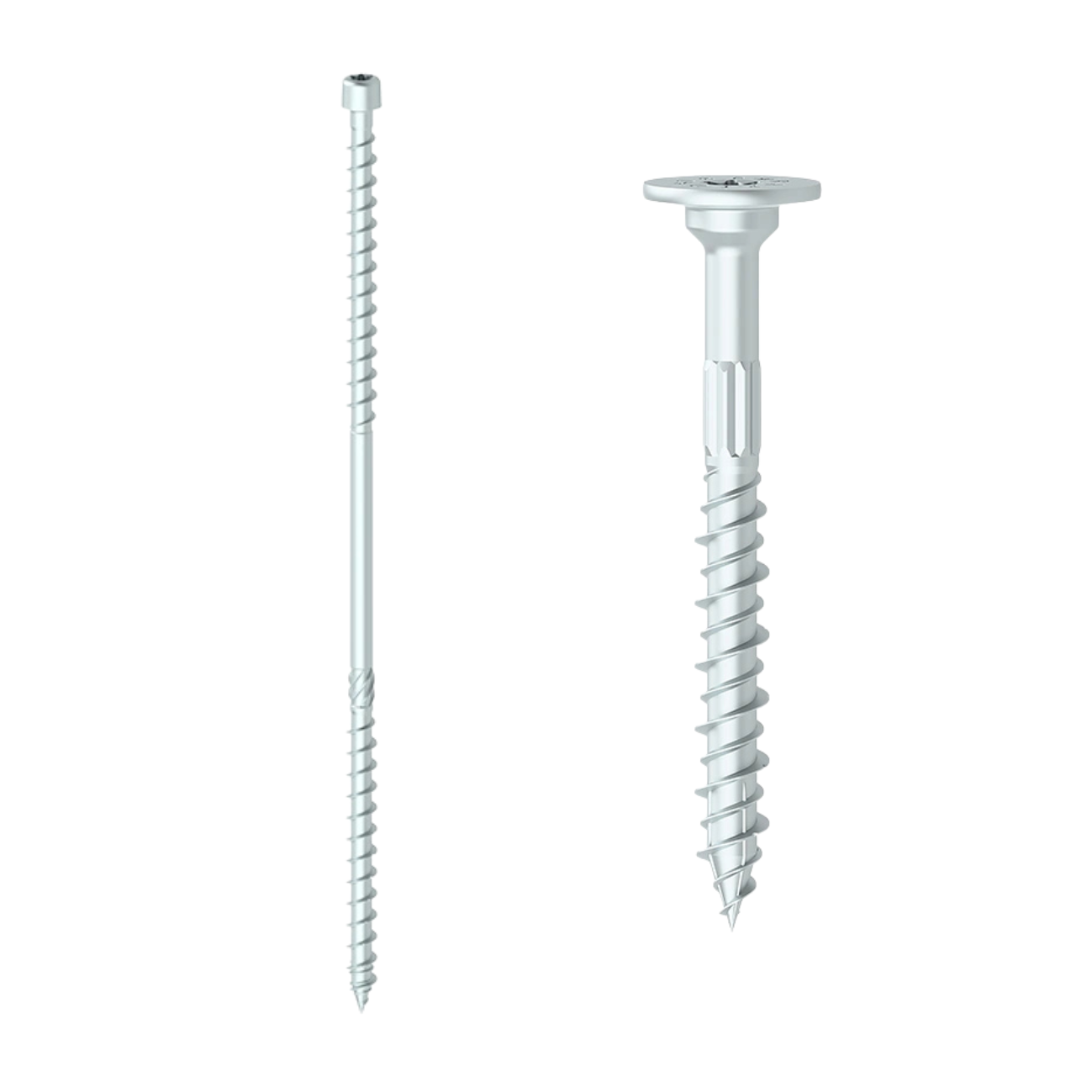
Partial-thread screws are commonly used to pull two components together. The unthreaded section allows the head-side member to close against the receiving member while the thread anchors in the lower timber.
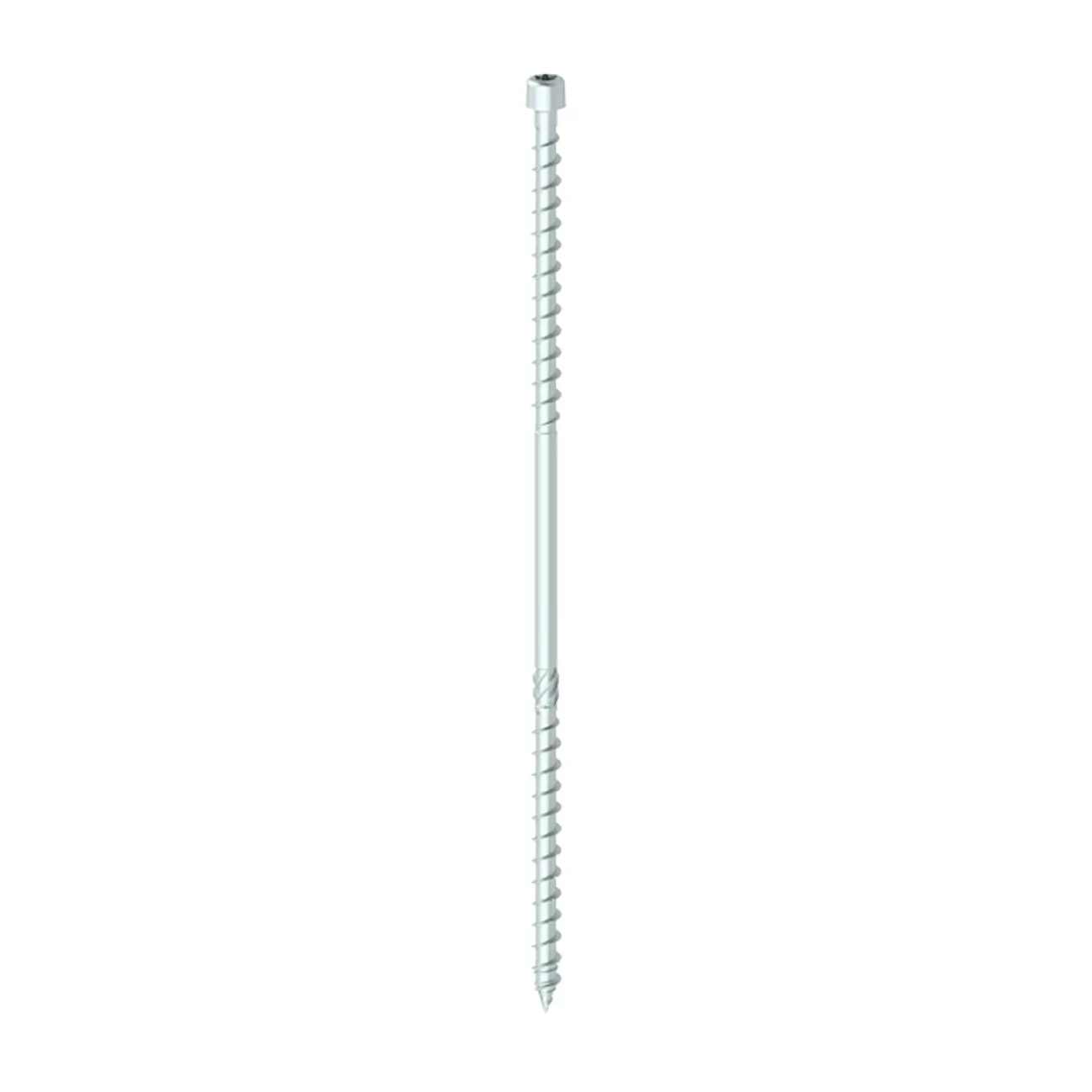
Full-thread screws can be used where load transfer and reinforcement are required along more of the screw length. Neither format is universally stronger; suitability depends on the connection model.
| Selection Point | Typical Uses |
|---|---|
| Partial thread | Clamping two timber components and transferring load through the head and engaged thread. |
| Full thread | Specified reinforcement or load transfer where thread engagement is required through a larger section. |
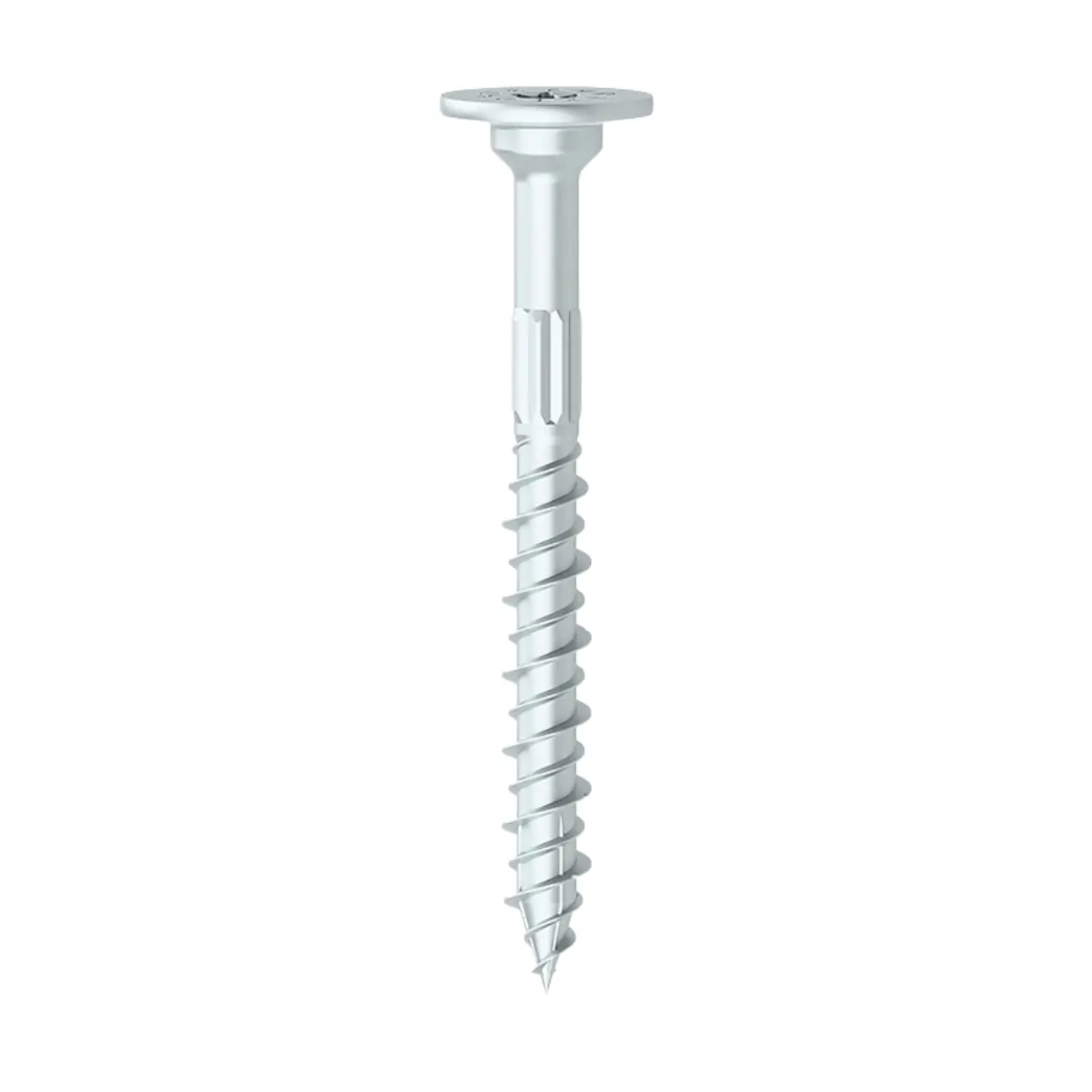
| Flush structural head | Connections requiring head-side resistance without a projecting washer head. |
| Cylinder head | Deep or concealed installation where a small head is required; suitability for metal-to-timber must be checked. |
CLT is layered, so the intended fixing position and direction relative to the laminations must be clear. A screw into the broad face does not behave identically to one installed into a narrow edge or end-grain condition.
Use a screw system with technical data covering the proposed direction and substrate. Schmid states that RAPID® screws are approved for relevant side- and end-grain applications and CLT side faces and narrow edges, subject to the detailed approval conditions.
The screw head transfers load into the head-side component. A small countersunk head, large washer head and high-performance flush head provide different bearing areas and pull-through characteristics.
RAPID® SuperSenkFix is intended to combine a flush finish with high pull-through resistance. It can therefore suit structural timber and CLT details where a projecting head would interfere with finishes or following trades.
Designed structural connections require screws with suitable performance data and approval for the application. A general-purpose wood screw should not be substituted without design approval.
No. Many approved structural screw systems are self-drilling. Pre-drilling may still be required by the design or because of timber density, edge distance or installation conditions.
Panel thickness is only one factor. Required thread engagement, connected-member thickness, angle, load and approval limits must also be considered.
View Schmid RAPID® SuperSenkFix screws for structural timber and CLT connections.
View RAPID® SuperSenkFix screws | Ask TC Fixings about availability
Posted: 12th August 2026
Author: TC Fixings






Unit 39, Shirehill Industrial Estate
Saffron Walden, Essex, CB11 3AQ
Telephone: 01799 520640
Email: sales@tcfixings.co.uk


Design by Sharp-ax Computer Systems Ltd
There were items in your basket from your previous session, would you like to continue with your previous basket?
OR
Empty Basket & ContinueWe use cookies and other tracking technologies to improve your browsing experience on our website, to show you personalised content and targeted ads, to analyze our website traffic, and to understand where our visitors are coming from. Learn more
Necessary Cookies
Required
Necessary cookies enable core functionality. The website cannot function properly without these cookies, and can only be disabled by changing your browser preferences.
Analytical Cookies
These cookies help us to improve our website by providing insights into how the site is being used.
Marketing Cookies
These cookies allow us to understand how you interact with our website so we can serve relevant ads to you based on your browsing behaviour.