FREE Delivery Over £30 Nett
15,000+ Stock Lines
30 Day Returns

Family Owned & Run
Celebrating 30 Years of Trading.
To mark 30 years of trading this month, we have reduced our carriage paid threshold to £30 nett.
Coach bolts and coach screws are both widely used in timber construction, but they are designed for different types of fixing. Choosing the right one will affect strength, installation time and long-term performance.
This guide explains the difference between coach bolts, carriage bolts, lag bolts and coach screws, and when each should be used on site.
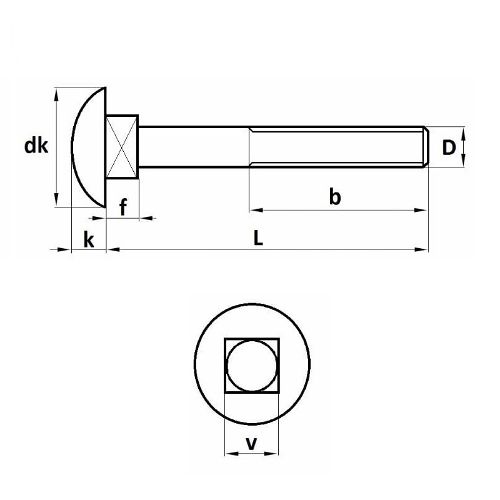
A coach bolt, also known as a carriage bolt or cup square hex bolt, is a through-bolt with a domed head and square neck.
The bolt passes through the material and is secured with a nut and washer on the opposite side.
A coach screw is a heavy-duty timber screw with a hex head. It is driven directly into timber without the need for a nut.
Coach screws are sometimes referred to as lag screws or lag bolts, particularly in US terminology.
| Feature | Coach Bolts | Coach Screws |
|---|---|---|
| Fixing method | Through-bolt with nut | Screwed directly into timber |
| Access required | Both sides | One side only |
| Strength | Higher clamping force | Dependent on timber grip |
| Installation speed | Slower | Faster |
| Typical use | Structural connections | Timber fixing and framing |
Scroll sideways on smaller screens to view the full table.
Use coach bolts where strength and security are critical:
Coach screws are more practical where access is limited:
The term “lag bolt” is often used in search but can refer to different products.
In most cases, it refers to a coach screw rather than a coach bolt. This is why checking the product type is important when ordering.
The choice comes down to access and required strength.
Contact TC Fixings for advice on coach bolts, coach screws and timber fixings.
Posted: 6th March 2020
Author: TC Fixings