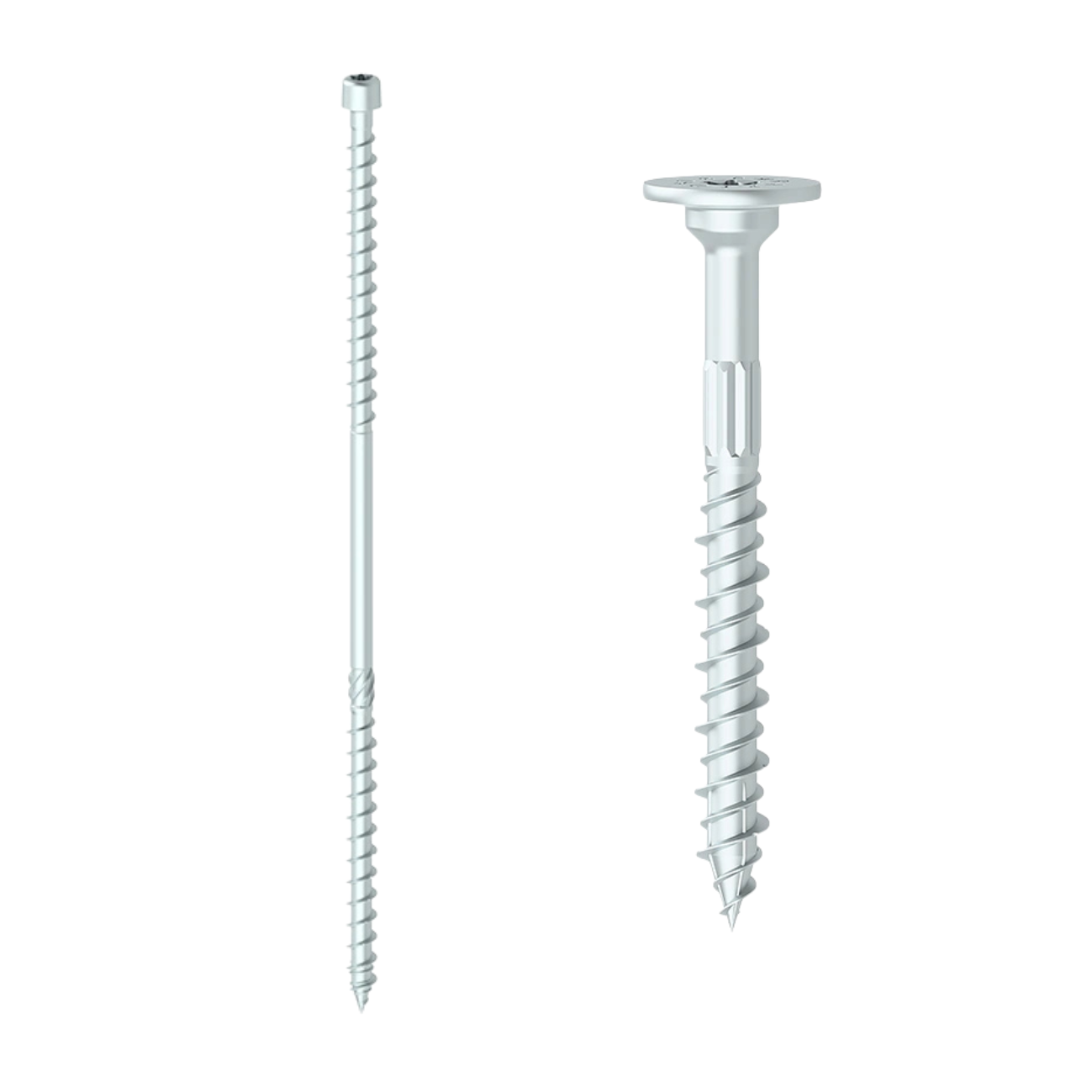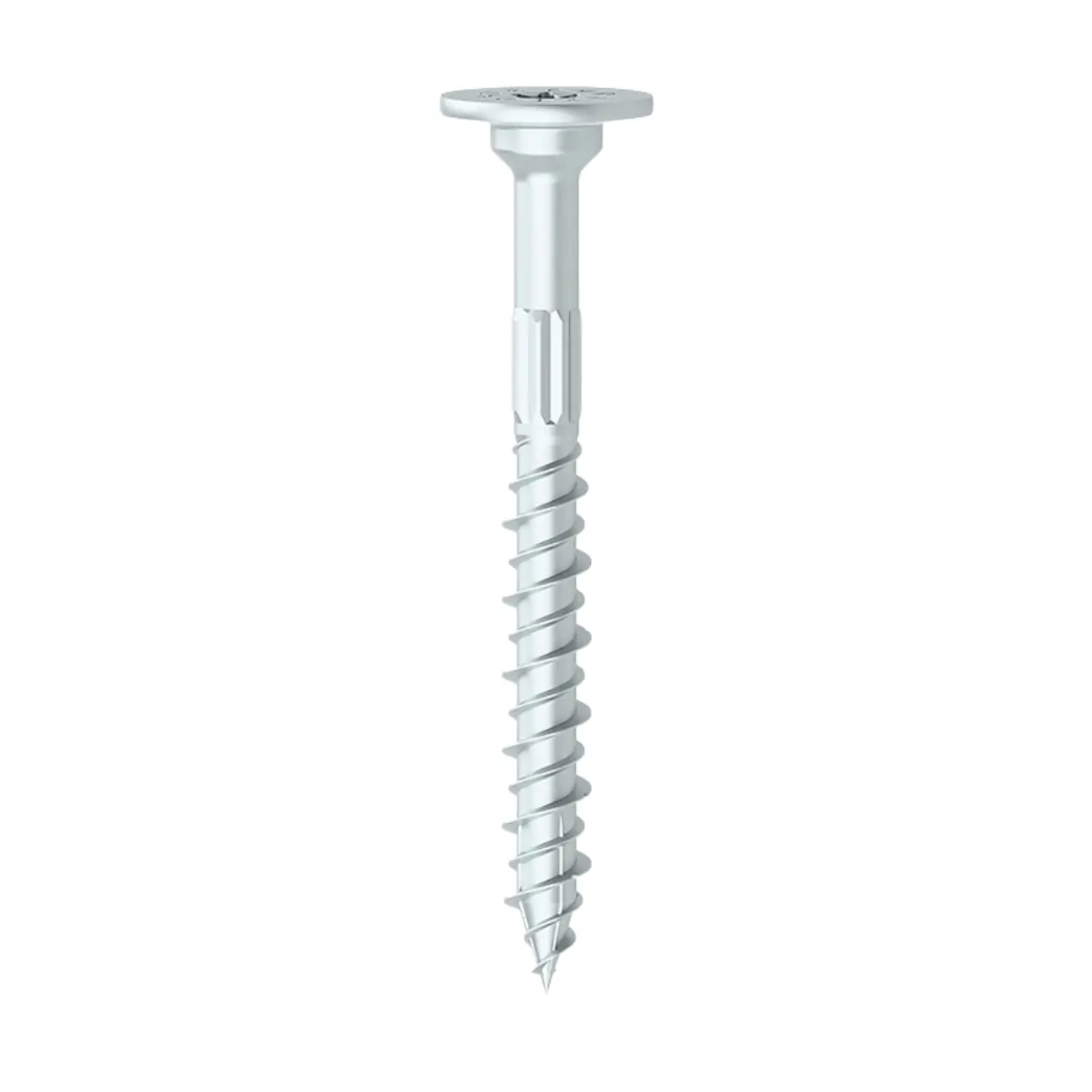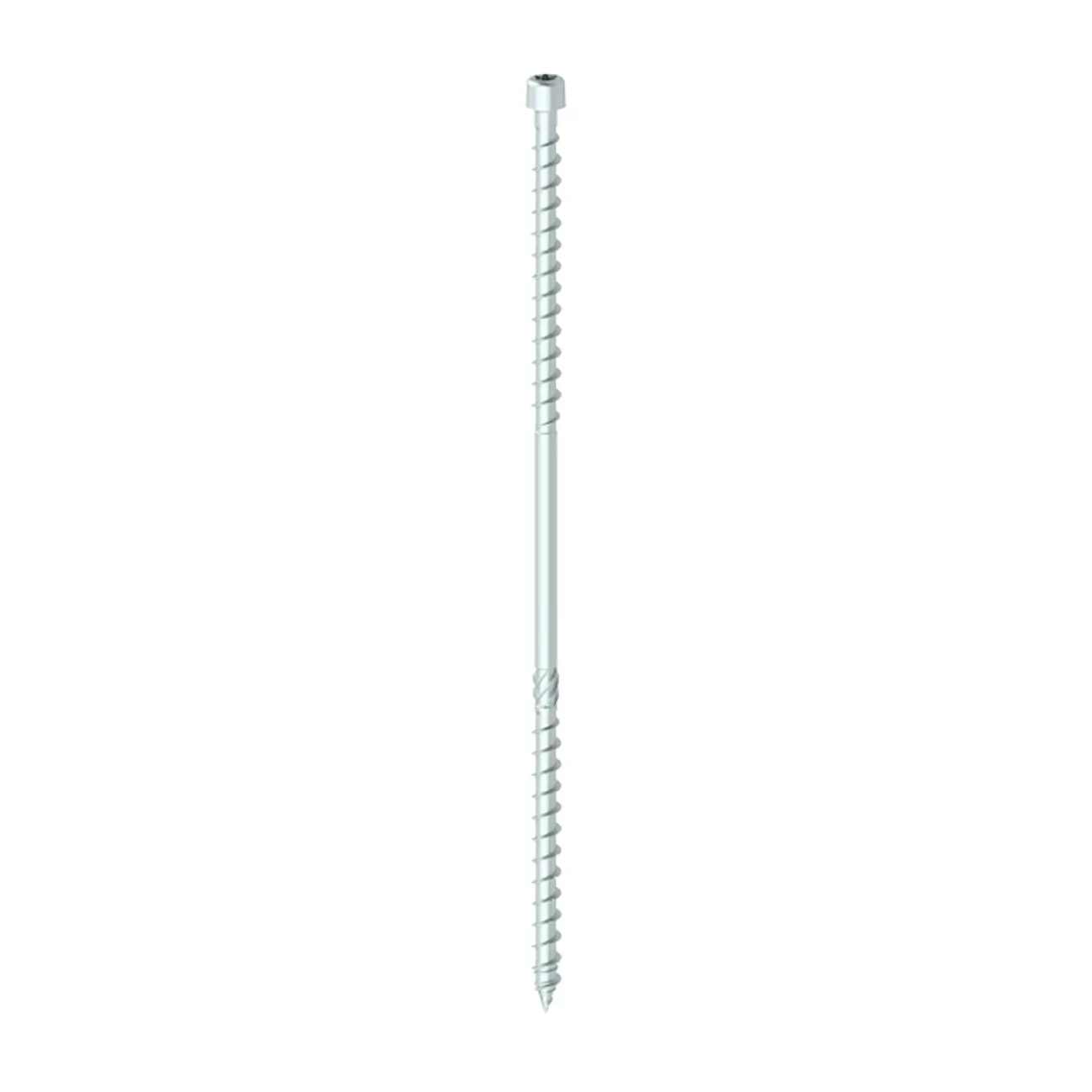


SPEEDpoint screws are German-manufactured wood screws designed for timber construction, joinery and general building work.
They are produced using the same manufacturing processes as premium screw brands but use imported steel rather than premium German steel. This allows them to deliver reliable performance at a more cost-effective price point.
For many trade applications, SPEEDpoint screws provide the strength and driving performance required for everyday site work.
They are commonly used for:
- Timber framing
- Decking and fencing
- Joinery and cabinetry
- Interior construction
- General building applications
Their thread design allows fast penetration into timber while maintaining good holding strength.
Key Features of SPEEDpoint Screws
SPEEDpoint screws are designed for consistent driving performance and reliable fixing in timber.
Typical features include:
- Precision thread design for timber
- Reduced cam-out during installation
- ETA approval for strength and performance
- Consistent manufacturing standards
- Cost-effective alternative to premium structural screws
For contractors and builders carrying out routine timber work, they provide a dependable everyday fixing.
Choosing the Right Screw Size
Selecting the correct screw size is important for achieving secure timber connections.
Two main factors should be considered:
- Screw diameter
- Screw length
As a general rule, the screw should penetrate the base material by at least two times the thickness of the material being fixed.
For example, when fixing a 20mm board into timber framing, a screw length of around 50–60mm would normally be suitable.
| Material Thickness | Typical Screw Length | Common Application |
|---|---|---|
| 12–18mm | 30–40mm | Cabinetry and sheet materials |
| 18–25mm | 40–60mm | General timber fixing |
| 25–40mm | 60–80mm | Framing and structural timber connections |
| 40mm+ | 80–120mm+ | Heavy timber construction |
These are general guidelines. Specific applications may require different screw sizes depending on load and material type.
Thread Types and Timber Performance
The thread pattern of a wood screw affects both installation speed and holding strength.
Coarse Threads
Coarse threads are commonly used in softwood and general timber applications. They bite quickly into the material and provide good holding strength.
Fine Threads
Fine threads are better suited to hardwood or dense timber where slower cutting reduces splitting.
Multi-Thread Designs
Some screws use multi-thread designs to increase installation speed while maintaining holding power.
This is useful when installing large numbers of screws in framing or decking.
Drive Types
The drive type determines how the screw is installed and how well the bit transfers torque.
| Drive Type | Advantages | Typical Use |
|---|---|---|
| Torx / T-Star | High torque transfer and reduced cam-out | Professional timber work |
| Pozi | Compatible with widely available bits | General construction |
| Phillips | Common but more prone to cam-out | Light duty applications |
Many professional tradespeople prefer Torx drive screws because they allow higher torque without slipping.
Coatings and Corrosion Resistance
The coating of a screw determines where it should be used.
Zinc Plated
Zinc plated screws are typically used for interior joinery and construction. They offer basic corrosion resistance but are not suitable for exposed outdoor environments.
Exterior Coated Screws
Special coatings provide improved corrosion protection for outdoor timber work, including decking and fencing.
Stainless Steel
Stainless steel screws are recommended for:
- Marine environments
- Coastal locations
- Highly corrosive conditions
They provide excellent corrosion resistance but are typically more expensive.
SPEEDpoint vs SPAX Screws
SPEEDpoint and SPAX screws are closely related products manufactured in Germany.
| Feature | SPEEDpoint Screws | SPAX Screws |
|---|---|---|
| Manufacturing | Made in Germany | Made in Germany |
| Steel type | Imported steel | Premium German steel |
| Price level | More cost-effective | Higher price point |
| Certification | ETA approved | ETA and ICC-ES approved |
| Typical applications | General timber construction | Structural and specialist use |
For everyday building and timber work, many contractors choose SPEEDpoint screws because they provide reliable performance at a lower cost.
Common Applications
SPEEDpoint screws are suitable for a wide range of construction and joinery tasks.
Typical uses include:
- Decking installation
- Timber framing
- Fence construction
- Cabinetry and joinery
- Timber cladding
- Interior building work
Their design allows consistent installation in both softwood and hardwood materials.
Wood Screw Size Chart
Selecting the correct screw size is important for achieving a secure fixing and avoiding timber splitting. The chart below provides general guidance for common timber applications.
| Screw Gauge | Metric Diameter | Typical Length Range | Common Use |
|---|---|---|---|
| No.6 | 3.5mm | 20–40mm | Light joinery and small timber components |
| No.8 | 4.0mm | 30–60mm | General timber fixing and cabinetry |
| No.10 | 5.0mm | 40–80mm | Framing, structural timber and decking |
| No.12 | 5.5–6.0mm | 60–120mm+ | Heavy timber connections |
These sizes represent common screw gauges used in timber construction. Exact requirements may vary depending on load and material type.
Decking Screw Size Guide
Decking boards require screws that provide sufficient holding strength while allowing timber movement.
For most decking installations:
- 4.5–5.0mm diameter screws are commonly used
- Length should be around 2.5 times the board thickness
For example:
| Deck Board Thickness | Recommended Screw Size | Typical Use |
|---|---|---|
| 19–22mm | 4.5 x 50mm | Standard decking boards |
| 25–28mm | 5.0 x 60mm | Heavy decking boards |
| 30mm+ | 5.0 x 70–80mm | Structural timber decking |
Exterior or corrosion-resistant screws should always be used for decking installations.
How to Prevent Timber Splitting
When fixing screws close to the edge of timber, splitting can occur if the screw diameter is too large or if the timber is dense.
Common methods used by tradespeople include:
- Drilling a pilot hole in hardwood
- Using screws with cutting points
- Keeping fixings at least 10–15mm from timber edges
- Using multi-thread screws designed for timber
Screws designed specifically for wood often include features that reduce splitting during installation.
Frequently Asked Questions
Are SPEEDpoint screws made in Germany?
Yes. SPEEDpoint screws are manufactured in Germany using established production processes.
Why are SPEEDpoint screws cheaper than SPAX?
They use imported steel rather than premium German steel, which reduces manufacturing cost while maintaining the same production methods.
Can SPEEDpoint screws be used outdoors?
Exterior-coated versions are suitable for outdoor applications such as decking and fencing.
Are SPEEDpoint screws suitable for hardwood?
Yes. Their thread design allows reliable installation in both softwood and hardwood materials.
What screws should be used for decking?
Decking should be fixed with exterior-coated or stainless steel screws suited to outdoor timber use. In most cases, a 4.5mm to 5.0mm diameter screw is suitable, with length chosen to give enough penetration into the joist below.
What size wood screws should I use?
The correct screw size depends on the thickness of the material being fixed and the base material beneath it. As a general guide, the screw should penetrate the base material by at least two times the thickness of the top piece.
Are Torx screws better than Pozi?
For many trade applications, Torx screws offer better torque transfer and reduced cam-out compared with Pozi. This makes them a practical choice for repetitive fixing work, especially where speed and consistent driving performance matter.
Do wood screws need pilot holes?
Pilot holes are not always required, but they are recommended in hardwood, dense timber and when fixing close to edges. They help reduce splitting and make it easier to drive larger screws accurately.
Summary
SPEEDpoint screws provide a dependable fastening solution for general timber construction and joinery work.
They combine German manufacturing standards with practical pricing, making them a suitable choice for contractors and tradespeople carrying out everyday site work.
For many timber applications, they offer a reliable alternative to higher-priced structural screw brands.